How to Get a Care Assistant Job with No Experience?


Starting a career in care might feel quite intimidating, especially if you don’t have any direct experience. What you will be glad to know is that you can absolutely get a care assistant job with no prior experience, in fact, many employers actively look for people with the right attitude over formal experience.
If you’re compassionate, reliable and willing to learn, you’re already halfway there. This blog aims to break down exactly how to get started, what employers are really looking for and how to stand out even if your CV feels a little empty right now.
Why Care Assistant Jobs Are Accessible to Beginners
Care assistant jobs are one of the most accessible entry points into health and social care. The UK care sector is growing rapidly with an ageing population and increasing demand for support services; there is a consistent need for new carers entering the workforce.
According to Skills for Care:
- There are over 1.5 million people working in adult social care in England
- Around 165,000 vacancies exist at any given time
- Entry-level roles often don’t require prior experience
What does this mean for you? There’s a real opportunity here, especially if you’re motivated to start.
What Employers Actually Look For (It’s Not Just Experience)
One of the biggest misconceptions is that you need experience to get hired. Most employers prioritise soft skills and values.
The qualities that matter the most:
- Empathy and compassion
- Good communication skills
- Reliability and punctuality
- Patience and emotional resilience
- Willingness to learn
Think about it from this perspective:
You can train someone to follow care plans. You can’t easily train someone to genuinely care. For example, if you’ve helped a family member, volunteered, worked in retail or even coached a sports team, you’ve already developed transferable skills.
Step-by-Step: How to Get a Care Assistant Job with No Experience
1. Start With Transferable Experience
Even if you’ve never worked in care, you likely have relevant experience you just need to recognise it. Examples could include, looking after siblings or relatives, customer service roles, nursery or childcare work, volunteering, or team sports/leadership roles. These all show key care skills like communication, responsibility and teamwork.
Tip: Instead of saying ‘no experience’, reframe it as ‘I have experience working with people and supporting others.’
2. Get a Basic Care Qualification (Optional but Helpful)
You don’t need qualifications to start but having one can boost your confidence and CV. Good beginner courses are care certificate (often completed on the job) Level 1 or 2 Health and Social Care course, or online short courses (safeguarding, first aid, manual handling). These show initiative and that you’re serious about working in care.
3. Tailor Your CV for Care Assistant Jobs
Your CV doesn’t need to be long; it just needs to be relevant.
Focus on:
- People-facing experience
- Responsibility and trust
- Communication skills
- Any care-related exposure
Tip: Instead of ‘worked in retail’ rephrase to ‘Supported customers with queries, handles sensitive situations calmly and built positive relationships through clear communication’.
4. Apply to the Right Roles
Look for: Entry-level are assistant jobs, support worker roles, domiciliary positions, residential are homes hiring assistants. Many employers will offer training so don’t be put off by ‘experience preferred.’
5. Prepare for Interviews
This is where you can really stand out. Interviews in care are less about technical knowledge and more about who you are as a person. They are really testing your attitude, your empathy and your ability to stay calm and professional.
Common questions:
- Why do you want to work in care?
- How would you handle a challenging situation?
- What does good care mean to you?
What a Day in a Care Assistant Job Actually Looks Like
If you’re new to care, it helps to understand the reality of the role. It is hands on, sometimes challenging but also incredibly rewarding. Typical responsibilities include:
- Supporting individuals with daily routines
- Helping with personal care (washing, dressing)
- Providing companionship
- Assisting with meals and medication
- Recording and reporting changes
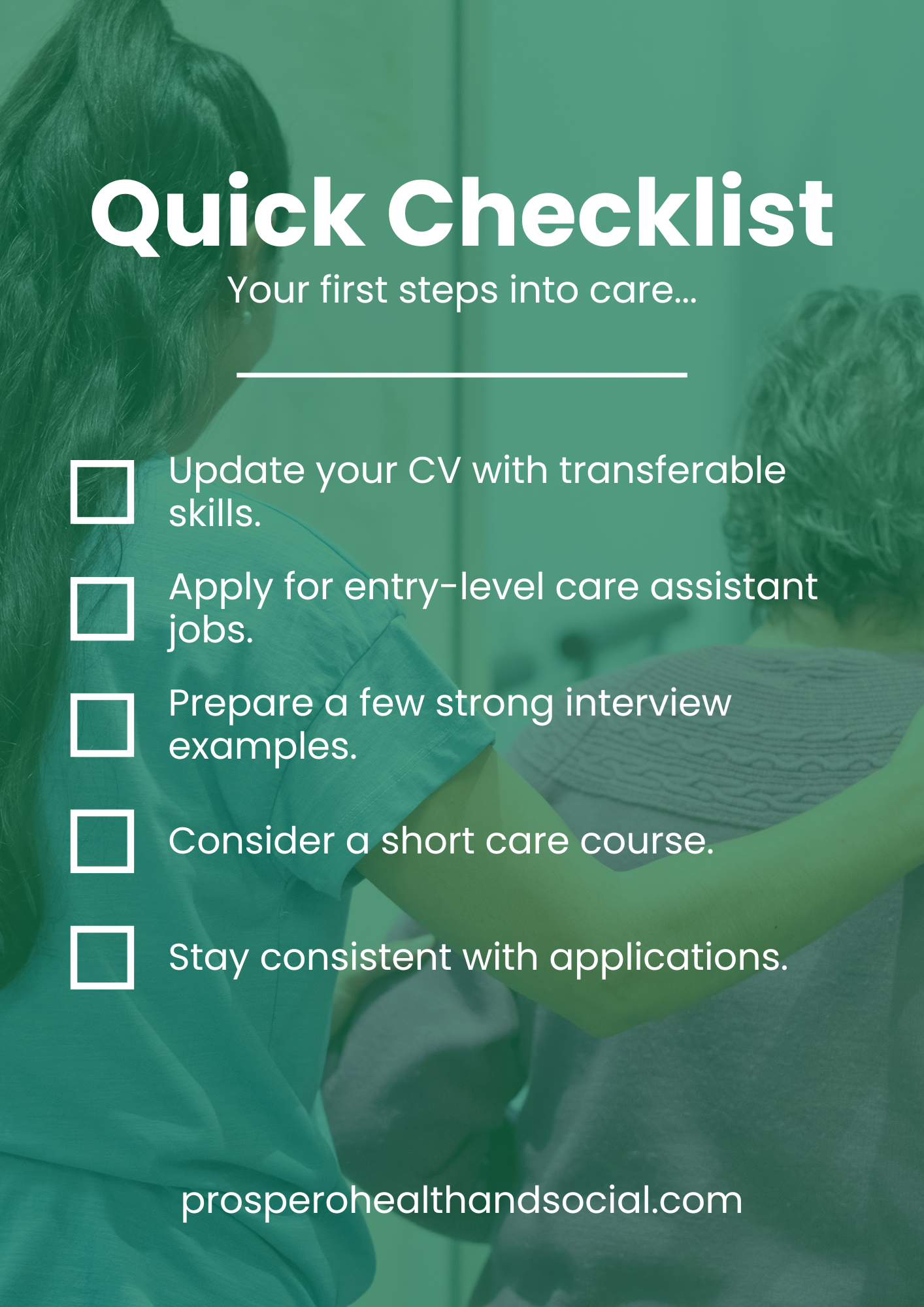
Key Points
If you’ve been holding back because you think you don’t have enough experience, this is your sign to start anyway. Care assistant jobs are one of the few career paths where who you are matters more than what you’ve done. Show your willingness to learn. Be genuine. Stay consistent.
Take the First Step Into Care
Latest Blogs
No results found.....