What Checks Are Required for Care Assistant Jobs? (DBS, Training & More)


If you are considering applying to roles as a care assistant, it is really important that you understand the checks and requirements employers will ask you to complete before starting work. These checks help ensure vulnerable children, young people, adults and elderly individuals receive safe and professional care.
Whether you are applying for your first role in care or returning to the sector, most employers across the UK will require a combination of DBS checks, training certificates, right to work verification, references and safeguarding compliance before you can begin working.
This blog aims to cover the key checks required for care assistant jobs, why they matter, and how you can prepare yourself to start work quickly and confidently.
Why Are Checks Important in Care Assistant Jobs
Care assistants work closely with vulnerable individuals in settings such as:
- Residential care homes
- Supported living services
- Children’s residential homes
- Mental health services
- Schools and specialist education settings
- Community and outreach services
Because of the nature of the role, employers have a legal and ethical responsibility to ensure staff are suitable, trained and safe to work with vulnerable people. These checks help employers:
- Protect service users
- Meet safeguarding regulations
- Comply with CQC and Ofsted standards
- Ensure staff understand safe working practices
- Reduce risk within care environments
DBS Checks for Care Assistant Jobs
One of the most important checks required for care assistant jobs in a Disclosure and Barring Service (DBS) check. A DBS check helps employers identify whether an applicant has any criminal convictions or information that may affect their suitability to work in care.
What Type of DBS Check Is Needed?
Most care assistant roles require an:
- Enhanced DBS check
- Enhanced DBS with barred list check (for regulated activity)
The level required depends on the role and the people you will be supporting.
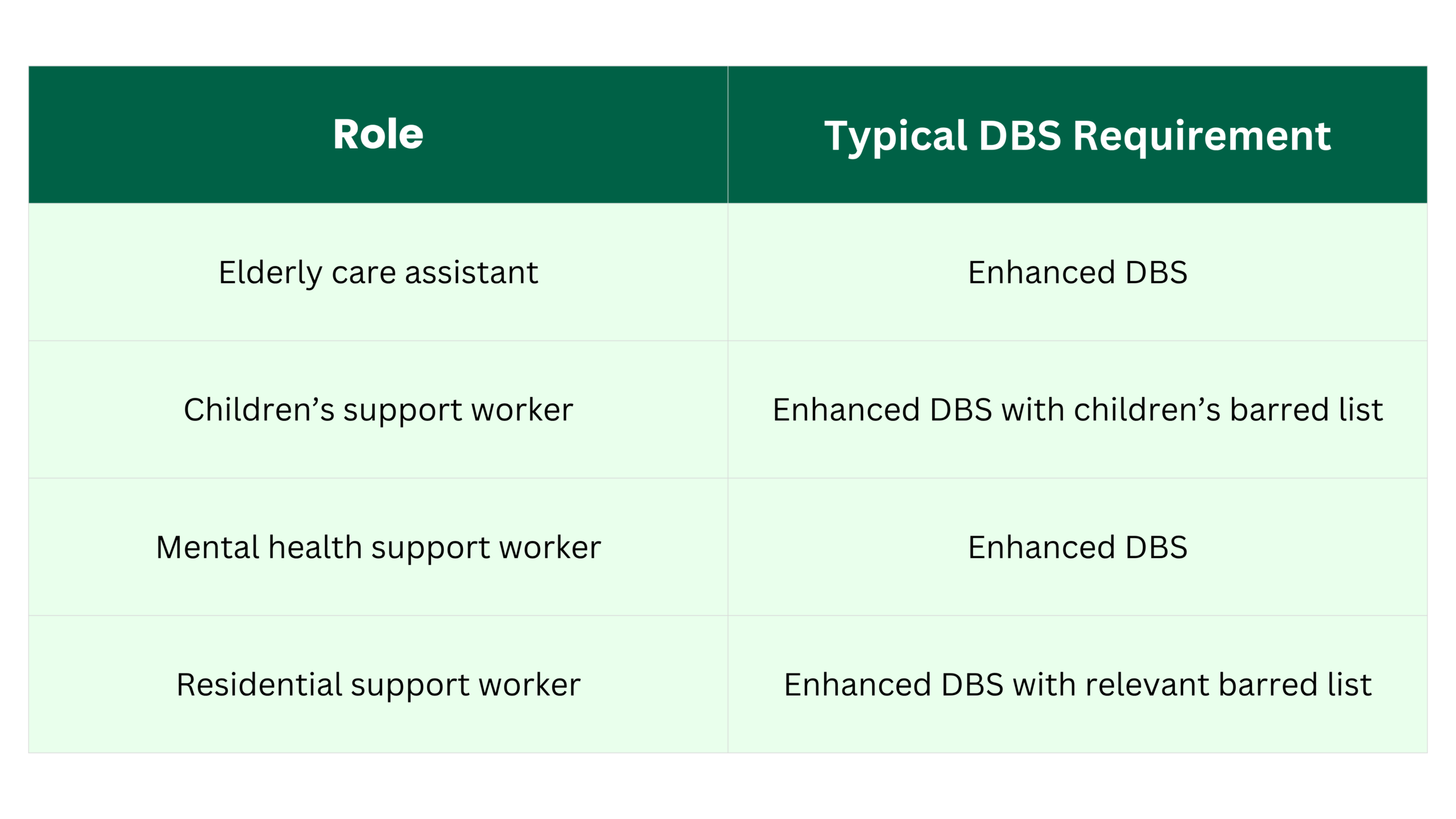
DBS Update Service
Many employers prefer candidates registered with the DBS Update Service, as it allows them to check whether your DBS certificate is still current online. Having a DBS on the Update Service can speed up the recruitment process significantly.
Right to Work Checks
All UK employers are legally required to confirm that candidates have the right to work in the UK. You may be asked to provide:
- A British passport
- A share code for digital immigration status
- A birth certificate and National Insurance number
- Visa documentation (if applicable)
Without valid right to work documentation, employers cannot legally offer employment.
Employment References
References are a key part of the recruitment process for care assistant jobs.
Most employers request:
- Two professional references
- Recent employment history
- References covering gaps in employment
If you are new to the sector, employers may accept:
- Education references
- Recent employment history
- References covering gaps in employment
References help employers understand your reliability, professionalism and suitability for working in care settings.
Mandatory Care Training
Training is another essential requirement for care assistant jobs. Employers need to know staff understand how to work safely and appropriately in care environments.
Common Mandatory Training Includes:
- Safeguarding adults and children
- Manual handling
- Health and safety
- Infection prevention and control
- First air awareness
- Food hygiene
- Equality and diversity
- Mental health awareness
Some employers provide training before you start, while others may prefer candidates who already hold up-to-date certificates.
Safeguarding Checks and Compliance
Safeguarding is central all health and social care roles. During recruitment, employers may assess:
- Your understanding of safeguarding
- Professional boundaries
- Behavioural responses in difficult situations
- Experience supporting vulnerable individuals
You may be asked safeguarding questions during interviews to ensure you understand how to recognise and report concerns appropriately.
Driving Licence and Vehicle Checks
Some care assistant jobs, particularly community-based roles, require candidates to:
- Hold a full UK driving licence
- Have access to a vehicle
- Provide business insurance documentation
This is common in:
- Domiciliary care
- Outreach support work
- Community mental health services
Experience Checks
Many employers look for previous experience in:
- Care
- Support work
- Education
- Youth work
- Healthcare environments
Typical requirements may include:
- 6 months paid care experience
- 12 months voluntary experience
- Experience supporting children or vulnerable adults
However, entry-level care assistant jobs are also available for candidates with transferable skills and a genuine passion for supporting others.
Qualifications for Care Assistant Jobs
Not all care assistant jobs require formal qualifications, but having relevant training can improve your employability. Useful qualifications include:
- Level 2 or Level 3 Diploma in Health and Social Care
- NVQ Health and Social Care qualifications
- Care Certificate
- First Aid qualifications
- Positive Behaviour Support (PBS) training
- MAPA or PMVA training
Many employers also offer ongoing professional development once you begin working.
How to Prepare for Care Assistant Jobs
If you are applying for care assistant jobs, preparing your documents and training in advance can help you secure work more quickly.
Before Applying, Try to Have:
- Valid photo ID
- Proof of address
- Updated CV
- DBS certificate (if available)
- Training certificates
- Professional references
- Right to work documents
Being organised shows professionalism and can help speed up compliance checks.
Are Care Assistant Jobs a Good Career Choice?
Care assistant jobs can offer rewarding and meaningful career opportunities for people who want to make a positive difference every day.
Benefits of working in care can include:
- Flexible working patterns
- Career progression opportunities
- Valuable transferable skills
- Variety in day-to-day work
- Opportunities to support vulnerable people directly
The UK health and social care sector continues to see strong demand for compassionate and reliable care professionals across a range of settings.
Final Thoughts
Understanding the checks required for care assistant jobs can help you feel more prepared when applying for roles in the health and social care sector.
From DBS checks and safeguarding training to references and right to work verification, these processes are designed to protect vulnerable individuals and maintain high standards of care across the UK.
If you are organised, compassionate, and committed to supporting others, care assistant jobs can provide a rewarding route into a long-term career in health and social care.
Ready to begin?
Latest Blogs
No results found.....